
Guide for brands, agencies and production companies
Digital Twins in Brand Campaigns: The Questions Brands Ask Before Licensing One
Will consumers accept it? Do we have to label it? What if the talent says no to the final cut? How real is it? The honest answers, with the evidence.
The short version
Consumers accept a digital twin in an ad when a real, consenting person is behind it and the brand is open about it; they reject AI-generated people who are nobody, and brands that hide it. New York’s and California’s disclosure laws target synthetic performers who are not identifiable real people, so they do not require a disclosure for a licensed twin of verified talent; the decision rests with your legal team, and PopTwin issues a licensing certificate and license ID for every deal to support whichever disclosure you choose. On PopTwin nothing ships and nothing is paid out until the talent approves the final assets; reasonable revisions are made and resubmitted, and in a rare standoff PopTwin proposes a refund. Voice is near indistinguishable in 2026; short, controlled video is photoreal; the talent’s approval is the quality gate.
This page is for a brand marketing team planning an AI-generated campaign, an agency buying on a client’s behalf, or a production company that needs a cleared digital double of a real person for video. If you are the talent, read the talent guide instead.
1How will consumers react to a digital twin in our spot?
It depends on two things the research keeps finding: whether there is a real, consenting person behind the face, and whether you are open about it. Consumers punish fake people and hidden AI. They have rewarded real talent’s licensed twins when the twin did something a shoot could not.
The numbers, 2025 to 2026:
- 74 percent of US adults say brands have a duty to disclose AI use in advertising, and 44 percent say discovering undisclosed AI would lower their trust. AI-generated people were the single most disliked AI element tested, at 46 percent (Cint with Advertising Week, about 1,000 US adults, August 2026).
- Only 7 percent of consumers say visible AI-generated marketing makes them trust a brand more; 31 percent say less (Klaviyo and Datalily, 8,000 consumers in eight countries, December 2025).
- 45 percent of Gen Z and Millennial consumers feel positive about AI-generated ads, while 82 percent of ad executives believe they do. That gap is the risk (IAB, fieldwork October 2025 to January 2026).
- 57 percent of consumers believe digital twins erode trust in creator content; 85 percent of creators are open to making one with a brand (Billion Dollar Boy, 4,000 consumers and 1,000 creators, UK and US, June 2025).
- 43 percent of North American consumers say a low-quality or uncanny AI ad would lower their opinion of the brand (DoubleVerify, 2026).
What the cases show. The backlash campaigns of the last two years had no real person in them and gave no reason for the AI beyond cost: a soft-drink holiday ad that viewers called wrong-looking, luxury-house visuals called cheap and lazy. The praised campaign is the opposite case: a confectionery brand licensed a film star’s face and voice, with his consent, to make thousands of personalised ads for small shops that could never afford him. It won the Titanium Lion at Cannes and was ranked the most effective campaign of 2023. A fashion retailer’s 2025 use of consenting models’ digital clones landed in between: accepted by most, questioned by some, mainly on whether the models were paid fairly.
The rule that falls out of this. Use a twin to do what a shoot cannot: personalise, localise, speak twelve languages, run two hundred variants, appear in a market the talent cannot fly to. Do not use it to avoid paying a person. Put a real, paid, consenting person behind it, let your legal team decide how you say so, and keep the talent’s own approval on every cut. Every one of those is a documented fact on PopTwin, and the next three questions are about them.
2Do we need an AI disclosure on a digital twin ad?
The leading state laws written for AI performers do not require a disclosure when the performer is a verified human identity under license. Whether to carry one is a decision for your internal legal team, and PopTwin gives that decision what it needs: a licensing certificate and a license ID number for every deal, and PopTwin’s consent to be named as the source in whatever disclosure you choose.
The law:
- New York, General Business Law 396-b, in force since June 9, 2026. A visual or audiovisual ad shown to New York consumers that features a synthetic performer must carry a conspicuous disclosure. A synthetic performer is an AI-generated human likeness that is not recognizable as any actual person. Penalties are $1,000 for a first violation and $5,000 thereafter, enforced by the state, with no private right of action.
- California SB 1050, signed September 16, 2026, in force January 1, 2027. The same idea. A synthetic performer is a digital figure or voice created wholly or partly with generative AI that gives the realistic impression of a human performance but is not an identifiable natural person. Wording such as “this performance features a synthetic performer” is acceptable. Violations tie into the state’s unfair competition law, which does allow private suits.
- A licensed digital twin of real talent is, by definition, an identifiable natural person, so it is not a synthetic performer under either definition. Confirm that with your counsel for your specific creative; a twin altered until the person is no longer recognizable may cross the line.
- The FTC’s endorsement rules apply in full. A twin can only say what the talent actually endorses, and a synthetic endorsement cannot be passed off as a spontaneous one. On PopTwin the talent approves the words put in their mouth, which is the record that answers this.
- Platform rules apply regardless of state law. The major social and video platforms require a label on realistic AI-generated or altered media of real people, and they remove unlabeled content when reported.
- The EU AI Act’s transparency rule (Article 50, applying from August 2026) requires disclosure of AI-generated likenesses if the ad runs in the European Union.
- The IAB’s 2026 disclosure framework recommends disclosure for AI voices and avatars, and requires it for digital twins of deceased people regardless of estate permission.
What PopTwin provides. Every licensor receives a licensing certificate and a license ID number for each deal, recording that the performer is a verified, identifiable person who licensed this specific use. PopTwin consents to being cited as the source for compliance in your choice of disclosure or disclaimer, so if your legal team decides to carry a line, it points to a license on file rather than to a claim.
3What if the talent does not approve the final assets?
Nothing ships and nothing is paid out. Approval of the final assets is the talent’s right under every PopTwin license, and the deal is built so that a decline is rare, cheap and early.
How it runs:
- Your request names the use, term, territory, channels, fee and, where there is one, the script. Most declines happen here, before any money moves or any asset is generated, and a decline costs you nothing.
- The talent approves the request. You sign the license and fund the deal up front. The funds are held, not paid out.
- Your production partner generates the creative from the licensed reference assets.
- The talent reviews the final cut against the license. They can approve, or send it back with reasons: a line they did not agree to, a use outside the scope, a likeness that does not look or sound like them.
- You make any reasonable revisions the talent requests and resubmit. In the rare case of a standoff, PopTwin proposes a refund so you can work with a different talent.
- On approval, the assets release for the licensed use and the talent is paid.
Why this protects you, not only the talent. An ad that the talent approved is an ad the talent cannot later disown in public, and the approval record is the document a right-of-publicity or FTC claim runs into. The practical advice: put the script in the request. Talent decline scripts, not products.
4How real does the digital twin look and sound?
In 2026, a licensed voice twin built from a clean reference set is near indistinguishable from the person in short and medium passages. Video is photoreal for short, controlled shots: a spoken line to camera, a product in hand, a localised version of a performance the talent already gave. Long dialogue, complex movement and unusual lighting still show seams, and a good production partner plans around them.
What sets the ceiling: the reference material and the tools. PopTwin is the licensing layer, not the generator. What you receive is a verified person’s reference set, captured to a production standard inside the PopVault (face from the needed angles, clean voice, natural movement), under a license that names your use. Your production partner generates the creative with whatever generation tools it uses, and the quality of the output tracks the quality of what went in.
The quality gate is the person. The talent reviews the final cut and declines a likeness that does not look or sound like them, which is the one check no automated metric can replace. And a twin does not have to pass as a shoot. The campaigns that worked were open about the twin, and the audience judged the idea, not the pixels.
5What do we actually receive?
Four records, kept for every deal. If a claim ever arrives, these are the documents your counsel asks for first.
| Record | What it proves | Who produces it |
|---|---|---|
| Verified identity and consent | The person in the assets is who they say they are, and they consented to this use, on this date, with these exclusions | PopTwin, at talent onboarding and at request approval |
| Signed scoped license | The use, term, territory, channels, fee, governing law and the AI-training exclusion, in one attorney-drafted document, with a licensing certificate and license ID | Both parties, through the Deal Builder |
| Approval record on final assets | The talent saw the finished creative and approved it before release | The talent, inside the platform |
| Payment record | The deal was funded before release and paid out on approval | PopTwin |
These are the four things an anonymous platform cannot give you, whatever its homepage promises, because they depend on a named operator standing behind the verification.
6How the licensing itself works, in brief
Seven steps, the same for a brand, an agency or a production company. Every brand is screened for legitimacy before it can search talent. Every profile is a person who passed a government ID check and a live selfie check and set their category exclusions at onboarding, so a profile you can see has not ruled out your industry. You send a scoped request naming use, term, territory, channels and fee; vague briefs are not accepted. The talent approves, counters or declines. Both sign the attorney-drafted license, which bars sublicensing and transfer and excludes AI training unless separately granted. You fund the deal up front: the fee you agreed is the fee you pay, PopTwin retains 19.5 percent of that payment, a rate published before you sign, and talent keep 80.5 percent. The talent approves the final assets and payment releases. When the term ends, access ends; renewal is a new request. Ownership of the likeness never moves. The talent guide walks the same deal from the other side.
The law a buyer has to respect
The short version: in the United States the right to control commercial use of a person’s face, voice and name belongs to that person, under the laws of every state, and several states have now written rules specifically for AI replicas. Canada reaches the same result through provincial privacy statutes and the Quebec Civil Code. This section is a map, not legal advice. PopTwin’s agreements are drafted by attorneys who work in likeness rights, and the license names its governing law.
| Rule | What it means for a buyer | How the PopTwin license addresses it |
|---|---|---|
| Right of publicity (every US state, by statute or common law) | Using a real person’s likeness in advertising without consent is actionable. The brand, agency and producer can all be named | Written consent from the verified person, scoped to the use |
| California AB 2602 (in force since 2025) | A contract for a digital replica of a performer is unenforceable unless it describes the intended uses specifically and the performer had counsel or union representation | Every license names the specific use, term, territory and channels; vague scope is not accepted |
| California SB 1111 (signed September 30, 2026) | An unauthorized digital replica carries the same penalties as an unauthorized photo, with a statutory minimum per violation; impersonation by replica is a crime | The license is the authorization |
| California SB 1050 (in force January 1, 2027) | Ads featuring a synthetic performer who is not an identifiable real person must carry a disclosure; private suits possible | A licensed twin is an identifiable real person; the licensing certificate and license ID record that fact for any disclosure you choose or need to make |
| California AB 1836 | A digital replica of a deceased performer needs the estate’s consent | Out of scope; PopTwin licenses living, verified talent only |
| New York GBL 396-b (in force June 9, 2026) | Ads shown in New York featuring a synthetic performer who is not an actual person must carry a conspicuous disclosure; $1,000 then $5,000 per violation | Same as above |
| Tennessee ELVIS Act (2024) | Liability for unauthorized AI use of a person’s voice or likeness, and for distributing tools built for it | Voice assets are licensed under the same scoped consent as face assets |
| Illinois BIPA | Collecting or storing biometric identifiers needs informed written consent and a published retention policy; private right of action with fixed damages | Talent consent and retention terms sit with PopTwin, not the buyer; the buyer receives licensed outputs, not the biometric reference set |
| FTC endorsement and deception rules | An AI-generated spokesperson cannot make claims the real person has not made, and a synthetic endorsement cannot be passed off as a real one | The talent approves the final assets, including the words put in their mouth |
| EU AI Act Article 50 (from August 2026) | AI-generated or manipulated likenesses must be disclosed when shown in the EU | The license records the fact to disclose |
| NO FAKES Act (federal, proposed) | Stalled in the Senate on September 30, 2026. If enacted it would create a federal digital replica right with notice and takedown | Already structured as a per-use, per-term license, which is what the bill would require |
| Canada: provincial privacy acts (BC, Manitoba, Saskatchewan, Newfoundland and Labrador) and the Quebec Civil Code | Using a person’s likeness for commercial purposes without consent is a statutory tort; Quebec adds image rights under the Civil Code | Same consent and scope; the territory field names Canada when it applies |
One practical rule covers all of them: the more specific the license, the safer the buyer. A one-line release signed years ago, a stock-photo license, or an influencer contract that never mentions AI does not cover a digital replica, and in California a vague one is void.
For production companies
A production company’s needs differ from a brand’s in three ways, and the same license handles all three.
- Several people, one project. A commercial, an episodic series or a localised campaign may need five or fifty digital doubles. Each person is a separate request, approval and license, because consent cannot be pooled. The Deal Builder keeps them under one project so your producer sees every approval in one place.
- Term and territory tied to the deliverable. A film that airs for years needs a term that matches, and a campaign localised into twelve markets needs twelve territories or a global grant. Both are fields in the request, priced by the talent, not assumed.
- Union performers. PopTwin’s license does not replace a union agreement. If the talent is a SAG-AFTRA or ACTRA member, the union’s digital replica terms apply alongside the license, and the talent’s profile says so. Bringing a cleared, consented double to a union production is easier than clearing one after the fact.
What a production company gets that a stock library cannot give: a named, verified person behind every face, a consent record for the exact use, and a performer who approved the finished cut.
Early brands on the waitlist
Brands and agencies already on PopTwin’s early-access list include Amerant Bank, Ntooitive, Metapyxl, Essentia Water, San Pellegrino, Perrier, Fleites Law, Velocity Social Media and LuCa Elite. Each joined the waitlist and agreed to be named as an early brand. Being named is not an endorsement and implies no deal.
Quick answers
- How will consumers react to a digital twin in an ad?
- Research from 2025 and 2026 says consumers dislike AI-generated people who are nobody (46 percent, the most disliked AI element in a 2026 US survey) and lose trust when AI use is hidden (44 percent). The campaigns that drew praise used a real, consenting, paid person’s licensed twin, were open about it, and used the twin to do something a shoot could not, such as personalising thousands of versions. On PopTwin every twin is a verified real person who approved the specific use.
- Do we have to disclose that an ad uses a digital twin?
- New York’s synthetic performer law (in force June 2026) and California’s SB 1050 (in force January 2027) require a disclosure for AI performers who are not identifiable real people. They do not require one for a licensed twin of a verified human identity. Platform labelling rules, the FTC’s endorsement rules and the EU AI Act still apply, and the decision rests with your internal legal team. PopTwin provides every licensor with a licensing certificate and a license ID number, and consents to being named as the compliance source in your chosen disclosure.
- What happens if the talent does not approve the final assets?
- Nothing ships and nothing is paid out. The talent reviews the final cut against the license and can approve or send it back with reasons. The brand or agency makes any reasonable revisions requested and resubmits. In the rare case of a standoff, PopTwin proposes a refund so the brand can work with a different talent. Most declines happen at the request stage, before any money moves, because the request carries the script.
- How real does a digital twin look and sound?
- A licensed voice twin built from a clean reference set is near indistinguishable in short and medium passages. Video is photoreal for short, controlled shots and still shows seams in long dialogue and complex movement. PopTwin supplies the verified reference set captured to a production standard and the license; your production partner generates the creative; the talent’s approval of the final cut is the quality gate.
- How does a brand license a creator’s AI likeness for an ad campaign?
- On PopTwin, a screened brand sends a scoped request to identity-verified talent naming the use, term, territory, channels and fee. The talent approves or declines. Both sign an attorney-drafted license that bars sublicensing and excludes AI training unless separately granted. The brand funds the deal up front, the talent approves the final assets, and payment is released. The brand keeps the consent record, the license, the approval record and the payment record.
- What does it cost to license a digital twin?
- The talent sets the fee for each licensed asset and its term, and that fee is what the brand pays. PopTwin retains 19.5 percent of that payment, a rate published before anyone signs, and talent keep 80.5 percent. Fees vary with the talent’s audience, the use, the term and the territory. The licensing estimator gives a range for a specific brief.
- Can we train our own AI model on the talent’s likeness?
- Not under the standard license. AI training on the talent’s reference assets is excluded unless the talent separately grants it, for a separate fee, in writing.
- What happens when the license ends?
- Access to the digital twin and the reference assets ends with the term. Assets published during the term stay published for the uses the license named. Renewal is a new request, a new approval and a new payment. Ownership of the likeness never transfers to the brand.
- Can a production company license several people for one project?
- Yes. Each person is a separate request, approval and license, because consent cannot be pooled, and the Deal Builder keeps them under one project. If the talent is a union member, the union’s digital replica terms apply alongside the license.
- How do we know a likeness licensing platform is legitimate before we buy?
- Four checks: a named legal entity that matches a public company record, founders named on the site and on verifiable profiles, terms of service with a governing-law clause plus a privacy policy that covers biometric data, and a published talent share with payment funded before release. PopTwin publishes all four: TalentPortal AI, Inc., a Delaware corporation in Miami, founders named on the site and on Crunchbase, attorney-drafted agreements, and a published 80.5 percent talent share.
Sources
- Cint with Advertising Week, US consumer survey on AI in advertising, August 2026 (released October 20, 2026).
- Klaviyo and Datalily, eight-country consumer study on AI-generated marketing, December 2025.
- IAB, “The AI Ad Gap Widens” and the 2026 AI disclosure framework.
- Billion Dollar Boy, Muse Two report on digital twins and virtual influencers, November 2025.
- DoubleVerify, 2026 consumer study on AI-generated advertising.
- WARC Effective 100 (2023) and Cannes Lions 2022: Cadbury “Not Just a Cadbury Ad” (Ogilvy, Wavemaker, Rephrase.ai).
- New York General Business Law 396-b: client alerts from Honigman, Crowell & Moring, Kelley Drye and McDermott Will & Emery, June 2026.
- California SB 1050: client alerts from Morgan Lewis, BakerHostetler, Manatt and Sheppard Mullin, September and October 2026.
This guide is educational information, not legal advice. Laws change and vary by state. Consult a licensed attorney before running any campaign that uses a person’s name, image, likeness or voice.
License verified talent for your next campaign
PopTwin is the consent-first marketplace for digital Name, Image, and Likeness. Every twin is a verified real person who approves the specific use. The brand waitlist is open.
Join the brand waitlist Agency waitlist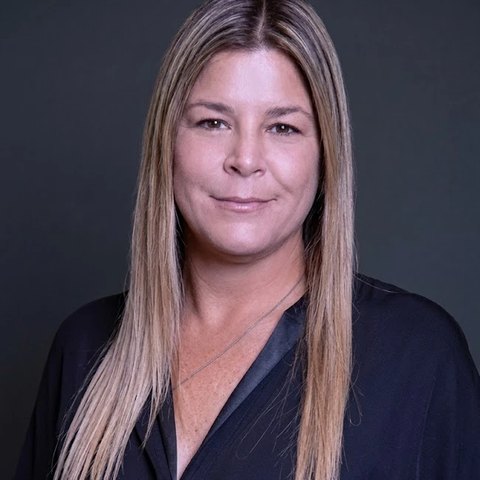
Caro Santamarina is the Founder and CEO of PopTwin.ai. A former NCAA athlete, she spent 20 years in media and entertainment leading operations, sales, partnerships, and expansions, building ecosystems from vision to scale. caro@poptwin.ai