
Guide
How to License Your Digital Twin: A Step-by-Step Guide for Talent
What you need, what a license must say, and what happens when it ends. Your digital twin is what California law now calls a digital replica. Here is how to license it without giving it away.
A digital twin license is a written agreement that lets a brand use an AI-generated version of your face, voice, or likeness, your digital replica, for a defined purpose, term, and territory, in exchange for a fee. It is a form of Name, Image, and Likeness licensing. You are not selling your likeness. You are renting one specific use of it, and when the term ends, that use ends with it.
This guide walks through how licensing works on a consent-first marketplace like PopTwin, what to insist on anywhere, and the rules that protect you after you sign. It applies to any public-facing talent: athletes, musicians, actors, influencers, models, and public figures.
The four things every legitimate platform does
- Verifies both sides. Government ID plus a live camera check for you, and a legitimacy screen for every brand, agency, and production house before it can search talent.
- Lets you set consent boundaries first. Price, excluded industries, territory, and channels, set once, before brands can ask.
- Scopes every license. A named use, a start and end date, a territory, and the channels it can run in. Nothing blanket, nothing perpetual.
- Pays through escrow. The brand funds the deal up front. You are paid when you approve the final assets.
1Verify your identity
Every legitimate platform starts here, because a brand cannot license a face nobody owns. Expect a government ID and a live selfie check. On PopTwin there are no exceptions: every talent profile is identity-verified before a single license can be requested, and every digital replica on the platform traces back to a real, verified person who signed for it. If a platform lets you list a face without proving it is yours, it will let someone else list yours too.
2Build production-quality reference assets in the PopVault
A twin is only as good as the material behind it. Brands need clean, well-lit reference images of your face from several angles, a few minutes of clear voice recorded in a quiet room, and short video of natural movement: how you talk with your hands, how you laugh, your resting expressions. Phone footage is fine. Blurry, noisy, or filtered material is not.
On PopTwin, capture happens inside the platform, in the PopVault. It is a guided digital asset capture module: it walks you through the face angles, voice samples, and movement clips a brand or agency needs to generate a digital replica that actually looks and sounds like you, and it checks quality as you go, so your twin is built from the right material rather than whatever was on your camera roll. Everything captured in the PopVault is encrypted at upload and held with gated, time-limited access. Assets are released to a brand only after a license is signed and payment is sitting in escrow. Until then, nobody sees them, and nothing is generated from them.
3Set your terms and category exclusions at onboarding
This is the step most talent skip, and it is where control is won or lost. Before any brand can contact you, you set:
- Your price range, by scope and term. The PopTwin estimator gives you an illustrative range in about a minute.
- Your category exclusions. Industries and product types your likeness will never appear in, such as alcohol, gambling, politics, or a competitor of a brand you already work with. On PopTwin, exclusions are set at onboarding, travel with your profile, and apply to every request. A brand in an excluded category cannot request you at all.
- Your default territory and channels, such as paid social in the United States and Canada.
Terms set once, in advance, mean you never negotiate from scratch under deadline pressure.
4Review every request individually
Before any of this, the buyer has been checked. Every brand, agency, and production house on PopTwin is screened for legitimacy before it is granted access to search talent profiles. A request can only reach you from a licensor that passed that screen, so you are never weighing an offer from an anonymous buyer.
A screened brand that wants to license your twin submits a request that names the exact use, the term, the territory, the channels, and the fee. You approve or decline. Nothing is approved on your behalf, nothing auto-renews, and declining costs you nothing. Legitimate platforms work this way. Any platform that offers brands “instant access” to your likeness has decided the answer for you.
5Sign a scoped license, not a blanket grant
The agreement is the product. A sound digital twin license, and every license on PopTwin, spells out:
- Scope. Exactly what can be generated and where it can run.
- Term. A defined period with a start and an end date. Never “in perpetuity.”
- Territory and channels. Named, not “all media now known or hereafter devised.”
- No sublicensing, no transfer. The brand cannot hand your likeness to a partner, an affiliate, or a company that buys them later. The license is theirs alone, and it does not travel with a sale of their business.
- AI training excluded unless separately granted. Using your assets to train a model is its own decision, separately priced, never bundled.
- Approval over final assets. You see every finished asset made with your digital twin before it goes live, and nothing goes live without your approval.
PopTwin generates this agreement for every deal. It is drafted by IP attorneys who specialize in protecting celebrity likeness, written in plain English, and built to hold up under BIPA, the ELVIS Act, and California’s digital replica laws. You are always free to have your own counsel or union review it before you sign.
6Get paid through escrow
The brand funds payment before any work begins. The money sits in escrow until you approve the final assets, then releases to you. Neither side takes the other on faith. On PopTwin, talent keeps 82.5 percent of every deal. The platform fee is 17.5 percent, published, not negotiated.
7When the license expires, access ends
This is the rule that separates licensing from selling. When the term ends, the brand’s access to your reference assets and your digital twin ends with it. Nothing renews on its own. If the brand wants to keep going, that is a new agreement and a new payment, at whatever your likeness is worth then, not what it was worth when you started. Ownership of your face, voice, and likeness never transferred in the first place, so there is nothing to get back. It was always yours.
Quick answers
- Do I give up ownership of my likeness?
- No. A license is permission for one defined use. Ownership stays with you before, during, and after every deal.
- Is a digital twin the same as a digital replica?
- Yes. Digital replica is the term California law uses for a realistic, computer-generated version of a real person’s voice or likeness. Digital twin and AI clone describe the same thing.
- Who can see my profile and send me requests?
- Only brands, agencies, and production houses that PopTwin has screened for legitimacy. Buyers are checked before they can search talent, so every request comes from a verified licensor.
- Can the brand resell or share my twin?
- No. Licenses are non-sublicensable and non-transferable. A change of ownership at the brand does not carry your license with it.
- Can I block certain industries?
- Yes. Category exclusions are set at onboarding and apply to every request, before a brand can even ask.
- What if I change my mind?
- You can decline any request for any reason. A signed license runs for its term and then ends. Nothing is perpetual.
- Can my twin be used to train AI?
- Not unless you separately and explicitly grant it. Silence in a contract is not consent.
- How long does a license last?
- As long as you agreed, with a defined end date. Renewals are new agreements.
- What happens to my assets when it ends?
- The brand’s access ends. Reference assets remain encrypted and under your control.
What the law protects, and what it does not
Protection is real but patchy, and it depends on where you live. Illinois’s BIPA requires written consent before biometric data like face geometry or a voiceprint is collected, and it carries per-violation damages. Tennessee’s ELVIS Act makes unauthorized commercial use of a person’s voice, including AI simulations, a violation. Most other states rely on right-of-publicity law that varies widely.
California went further in 2026. SB 1111, signed September 30, makes a digital replica part of your protected likeness, with a $750 minimum per unauthorized use and criminal penalties for impersonation. AB 2602, in force since January 2025, makes a replica clause unenforceable unless it lists the specific uses and you had counsel or a union when you signed. SB 1050, signed September 16, requires a disclaimer on ads that use AI performers who are not real, identifiable people. A licensed, identity-verified real person is not a synthetic performer.
There is no federal likeness law yet. The NO FAKES Act stalled in the Senate on September 30, 2026, and until something passes, your contract is your protection. PopTwin’s agreements are built to hold up under BIPA, the ELVIS Act, and California’s digital replica laws, and every license is written as if it were the only thing standing between you and misuse, because in most states it is.
Seven questions to ask any platform before you list
- Is every person on the platform identity-verified, with no exceptions?
- Are brands, agencies, and production houses screened before they can search talent?
- Can I exclude categories before brands see me?
- Is every use individually approved, or is there “instant access”?
- Is the license non-sublicensable and non-transferable, in writing?
- Is AI training excluded unless I separately grant it?
- Does the brand’s access end when the term ends?
If the answer to any of these is no, or vague, the platform has already made a decision that should have been yours.
Getting started
The waitlist is open now. Waitlist members get early access to full onboarding first, with public launch shortly after. Identity verification, reference assets, and your terms are set at onboarding. From there, every request comes to you, every asset is approved by you, and every yes is yours to give.
This guide is educational information, not legal advice. Laws change and vary by state. Consult a licensed attorney before signing any agreement involving your name, image, likeness, or voice.
License your likeness on your terms
PopTwin is the consent-first marketplace for digital Name, Image, and Likeness. Talent keeps 82.5% of every deal. The waitlist is open.
Join the waitlist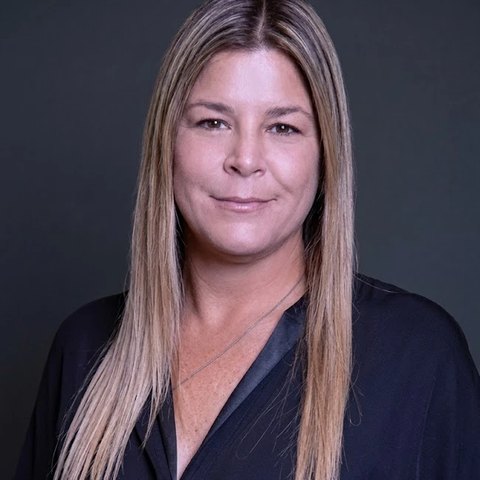
Caro Santamarina is the Founder and CEO of PopTwin.ai. A former NCAA athlete, she spent 20 years in media and entertainment leading operations, sales, partnerships, and expansions, building ecosystems from vision to scale. caro@poptwin.ai