
Guide
How to Compare Digital Twin Licensing Platforms: An 11-Point Checklist
Three kinds of product call themselves a digital twin platform. Only one of them is a licensing marketplace. Here is how to tell them apart before you list your face.
Search “digital twin platform” and you get three very different things wearing the same name. One makes an AI version of you. One stores faces for other people to use. One licenses your likeness to brands under a contract you control. If you are talent, an athlete, a musician, an actor, an influencer, a model, or a public figure, only the third one is built for you, and the differences are not cosmetic. They decide who can use your face, for how long, and whether you get paid before or after.
This guide gives you the eleven questions that separate a consent-first licensing marketplace from everything else, the red flag behind each one, and what PopTwin publishes on each point so you can hold us to the same standard. We do not name other platforms here. Run the checklist against any of them yourself; the answers are either on their site or they are not, and that is the first answer.
Three kinds of “digital twin platform”
1. Generation tools
Software that builds an AI version of you from photos, a voice sample, and a few minutes of video, then lets you or a customer produce videos with it. Useful for making content. Not a marketplace, and usually not a legal layer: the terms of service govern the tool, not the brand deal. If a brand uses one of these with your assets, the only contract protecting you is whatever you signed with the brand.
2. Face libraries and registries
Catalogs of real people’s faces and voices that buyers can pick from, sometimes at a flat price per image or per episode, sometimes with a registry record that proves consent was given at some point. The person is listed; the buyer selects. Approval is usually at signup, not per use. Payment is usually after use. These are closer to stock photography than to licensing.
3. Consent-first licensing marketplaces
Two-sided platforms where verified talent set terms first, screened brands request a specific use, a scoped license is signed, the brand funds the deal up front, payment is released when the talent approves, and the brand’s access ends when the term ends. The asset is the contract. This is the category PopTwin is in, and the eleven questions below are the test for it.
The short version
- Generation tool: makes the twin. Governs the software, not the deal.
- Face library: lists the twin. Buyer picks, pays after, approval was at signup.
- Licensing marketplace: licenses the twin. Talent sets terms, approves each use, is paid from a deal the brand funded up front, and access expires.
The 11 questions
Ask each one in writing. “Yes” should be on the site, in the terms, or in the agreement. “Trust us” is a no.
1. Who is behind it?Is the company named, with a legal entity, a city, and founders you can look up? A platform asking for your biometric data should be at least as identifiable as you are.
Red flagNo legal name, no founders, no address, or a company page that lists only a product name. Founders with no public footprint connecting them to the product.
PopTwinTalentPortal AI, Inc., a Delaware corporation based in Miami, founded January 2026. Founders named on the site, on Crunchbase, and on verifiable social platforms that show them owning the service, the platform, and the product.
2. Are the legal documents detailed, and who wrote them?Look for three documents before you upload anything: a full terms of service that names the governing law and sets out how each state’s likeness, biometric, and digital replica laws apply to every license, so your protection does not depend on which state the brand sits in; a privacy policy that says exactly what happens to your biometric data; and a licensing agreement drafted by attorneys who specialize in this field, not adapted from a stock template.
Red flagA one-page terms of service with no governing law clause. A privacy policy that never mentions biometric data. A licensing agreement you only see after your face is uploaded, or one copied from a generic contractor template.
PopTwinA published privacy policy that covers biometric data. Terms of service that name the governing law and set out how state likeness, biometric, and digital replica laws (BIPA, the ELVIS Act, and California’s SB 1111, AB 2602, and SB 1050) apply to every license. A licensing agreement drafted by IP attorneys who specialize in protecting celebrity likeness. At launch, you will see all three before you sign anything.
3. Is every person identity-verified, with no exceptions?Government ID plus a live camera check, before a single license can be requested. If someone can list a face without proving it is theirs, someone can list yours.
Red flagA signup, an email, or a selfie alone counted as a “verified twin.”
PopTwinEvery talent profile is identity-verified before it can receive a request. Every digital replica on the platform traces back to a real, verified person who signed for it.
4. Are licensors screened before they can search profiles and initiate any licensing?Brands, agencies, and production houses should pass a legitimacy check before they can see talent profiles, send a request, or start a license.
Red flagAnyone with a credit card can browse and request. Anonymous licensors.
PopTwinEvery brand, agency, and production house is screened for legitimacy before it is granted access to search talent. A request can only reach you from a licensor that passed that screen.
5. Do you set your boundaries first?Your licensing rates, excluded industries (alcohol, gambling, politics, competitors), territory, and channels should be set by you at onboarding and enforced before a brand can ask.
Red flagTerms negotiated deal by deal under deadline pressure, or no way to block a category at all.
PopTwinCategory exclusions, licensing rates, territory, and channels are set once at onboarding, travel with your profile, and apply to every request. A brand in an excluded category cannot request you.
6. Is every use individually approved?Each request should name the exact use, term, territory, channels, and fee, and you should be able to decline any of them for any reason.
Red flag“Instant access” for brands. Approval given once at signup. Anything that auto-renews.
PopTwinYou approve or decline every request. Nothing is approved on your behalf, nothing auto-renews, and declining costs you nothing.
7. Does the license have an end date and a named scope?A defined term with a start and an end, a named use, a territory, and channels. Not “in perpetuity.” Not “all media now known or hereafter devised.”
Red flagPerpetual, worldwide, all-media grants, or a flat per-image price with no term at all.
PopTwinEvery license names scope, term, territory, and channels, with a start and an end date.
8. Can the brand pass your likeness to someone else?The license should be non-sublicensable and non-transferable, and it should not travel with a sale of the brand’s business.
Red flagSilence on sublicensing. “Affiliates and successors” language.
PopTwinNo sublicensing, no transfer. A change of ownership at the brand does not carry your license with it.
9. Is AI training a separate decision?Using your assets to train a model is its own grant, separately priced, never bundled into a campaign license.
Red flagA standard license that includes training rights, or terms that do not mention training at all.
PopTwinAI training is excluded unless you separately and explicitly grant it. Silence in a contract is not consent.
10. How and when are you paid, and what is your share?The brand should fund the deal before any work begins. Payment should be held and released to you only when you approve the final assets. Your share should be a published number, not a negotiation.
Red flagPayment after use. A commission that varies by deal or is disclosed only after you sign. A buyer-side fee that quietly reduces what reaches you.
PopTwinThe brand funds every deal up front. Payment is mandatory before any digital assets are released, and it is released to you when you approve the final assets.
11. What happens when it ends?The brand’s access to your twin and your reference assets should end with the term. Your assets should stay encrypted and under your control. Renewal should be a new agreement at a new price.
Red flagNo stated rule for expiry. Assets stored on the buyer’s side. “Download once, use forever.”
PopTwinWhen the term ends, the brand’s access ends. Reference assets are encrypted in the PopVault and released only after a signed license and a funded deal. Renewal is a new agreement and a new payment.
The scorecard
Copy this table and fill in a column for each platform you are considering. We have filled in ours.
| Question | What a yes looks like | PopTwin.ai |
|---|---|---|
| Who is behind it | Legal entity, city, founders named | Yes |
| Legal documents | Terms of service with governing law and state-law application, privacy policy covering biometric data, attorney-drafted licensing agreement | Yes |
| Identity verification | Government ID + live check, no exceptions | Yes |
| Licensor screening | Brands, agencies, and production houses checked before they can search profiles or start a license | Yes |
| Boundaries set first | Licensing rates, category exclusions, territory, channels at onboarding | Yes |
| Per-request approval | Every use approved by the talent, nothing auto-renews | Yes |
| Defined term and scope | Start and end date, named use, territory, channels | Yes |
| No sublicensing or transfer | In writing, including on sale of the brand | Yes |
| AI training separate | Excluded unless separately granted | Yes |
| Payment and published share | Brand funds the deal before work, released on your approval, share is a number | Yes, 82.5% |
| Access ends at expiry | Brand access ends, assets stay encrypted with the talent | Yes |
A platform that scores eleven is a licensing marketplace. A platform that scores five is a face library with a contract attached. A platform that will not answer is telling you its score.
One more question: is it built for the law where you live?
Protection depends on where you are. Illinois’s BIPA requires written consent before biometric data like face geometry or a voiceprint is collected. Tennessee’s ELVIS Act makes unauthorized commercial use of a person’s voice, including AI simulations, a violation. California’s SB 1111 (signed September 30, 2026) makes a digital replica part of your protected likeness, AB 2602 (in force since January 2025) makes a replica clause unenforceable unless it lists the specific uses and you had counsel or a union when you signed, and SB 1050 (signed September 16, 2026) requires a disclaimer on ads that use AI performers who are not real people. There is no federal likeness law; the NO FAKES Act stalled in the Senate on September 30, 2026.
A platform that operates in the United States should be able to say which of these laws its agreements were drafted for. A compliance list copied from another jurisdiction is not the same thing. PopTwin’s agreements are drafted by IP attorneys to hold up under BIPA, the ELVIS Act, and California’s digital replica laws, and you are always free to have your own counsel or union review them before you sign.
Quick answers
- What is the best digital twin licensing platform?
- The one that answers yes, in writing, to all eleven questions above. Run the scorecard. PopTwin publishes a yes on every line, including a published 82.5 percent talent share.
- What is the difference between a licensing platform and a twin generator?
- A generator makes the asset. A licensing platform governs who may use it, for what, for how long, and for how much, and holds the money until you approve. You may use both; only one protects you.
- Is a registry the same as a license?
- No. A registry records that consent exists. A license defines a specific use, term, territory, channels, and fee, and ends. You can be in a registry and still have no control over the next use.
- Does a published talent share matter if the fee is small?
- Yes. A share that is negotiated privately can change with every deal and every buyer. A published number is the same for the first deal and the thousandth.
- Is a digital twin the same as a digital replica?
- Yes. Digital replica is the term California law uses. Digital twin, AI clone, and AI likeness describe the same thing.
- How does PopTwin score?
- Eleven of eleven, as published on this page and in our agreements. If you find a line where we fall short, email the founder directly.
This guide is educational information, not legal advice. Laws change and vary by state. Consult a licensed attorney before signing any agreement involving your name, image, likeness, or voice.
License your likeness on your terms
PopTwin is the consent-first marketplace for digital Name, Image, and Likeness. Talent keeps 82.5% of every deal. The waitlist is open.
Join the waitlist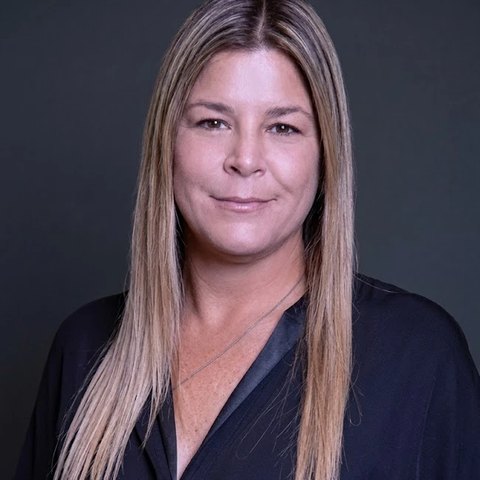
Caro Santamarina is the Founder and CEO of PopTwin.ai. A former NCAA athlete, she spent 20 years in media and entertainment leading operations, sales, partnerships, and expansions, building ecosystems from vision to scale. caro@poptwin.ai