
Perspective
What the Past Tells Us About the Future of Digital Twin Licensing
What the music industry's Napster years teach us about licensing your likeness.
I used this metaphor in an email I sent this morning, and it felt worth sharing publicly. The digitization of music had a real role in inspiring PopTwin.
In June 1999, Napster went live. Within a year, tens of millions of people were downloading music for free. Nobody had built the infrastructure to license a single song, track where it played, or pay the people who made it. The technology arrived first. The rails came later.
Much later. Apple's iTunes Store did not open until April 2003, four years after Napster, selling singles for 99 cents. By then the damage was done. The record business had treated the $14.99 CD as its margin and could not see that a 99-cent single, sold at a scale no CD could reach, was the new unit of value. Global recorded music revenue fell by roughly $9 billion, about 40 percent, from the CD peak to a 25-year low in 2014. EMI, one of the four major labels, stopped existing as an independent company. It took the industry fifteen years to find the bottom.
I spent 20 years inside media and entertainment. The lesson was never that digital was bad. The single was a better product. It cost almost nothing to distribute, it reached territories physical distribution could not, and it made a new artist discoverable in a week instead of a year. The failure was that the people who owned the catalog waited for someone else to build the rails, and the people who built the rails set the terms.
Your likeness is now a digital asset
A person's digital name, image, and likeness, their digital twin, carries the same margins and scalability the digitized single brought to music. It can be sourced, licensed, and monetized at a rate no human has the capacity for. One athlete's twin can appear in a sportswear commercial, an athleisure campaign, and an automaker's regional spot at the same time, in different markets, in different languages, without the athlete leaving practice. That is not a threat to talent. It is the largest expansion of what a person's identity can earn since the endorsement deal was invented.
Unless there are no rails. Then it is Napster again: the technology works, the use is everywhere, and nobody is licensed, tracked, or paid.
We are in the Napster window right now. In January, Khaby Lame, the most followed person on TikTok, agreed to a deal reported at $975 million that centered on an AI digital twin of him: his face, voice, and behavioral data, licensed to produce content across languages and time zones. Months later the deal is widely reported as stalled. Whatever happens to it, note what it proved. One person's twin was valued at close to a billion dollars, and even at that scale the deal was built by hand, with no standard rails underneath it.
What the rails look like
Verified identity, so every twin traces back to a real human who consented. A licensing agreement that spells out what can be generated, for how long, where, and for how much, and bans everything else. Payment held in escrow, so the talent is paid when the work is approved and the brand is protected until then. Encrypted assets that never move until the money does. And a published split: on PopTwin, talent keeps 82.5 percent of every deal.
Who this opens up
Take college athletes. Since 2021 they can earn from their name, image, and likeness. In practice, a regional business that wants a local athlete in a campaign faces a multitude of phone calls: first redirected to non-representatives, then to pseudo-representatives, and finally to the agent, who still has to walk the athlete through the opportunity before anyone can say yes. I have run that drill myself. The friction does not protect the athlete. It costs them the deal, because the business gives up and buys stock footage instead. With PopTwin's guardrails, licensing, and talent-first agreements, that same business can book the athlete's likeness in an afternoon, at a price the athlete set, on terms the athlete approved.
The same holds for a musician whose fans are in twelve countries, an actor between projects, or a public figure whose face carries trust. Scale used to require the person. Now it requires the person's consent.
The labels had four years
Napster to iTunes was four years. The music industry spent them litigating instead of building, and it paid with 40 percent of its revenue. Talent has the same window right now, and this time the rails can be built by the people who own the asset.
That is what PopTwin is being built to do: accelerate adoption, securely and legally, with one objective. Talent's IP stays theirs, while their likeness scales further than they ever could alone.
License your likeness on your terms
PopTwin is the consent-first marketplace for digital Name, Image, and Likeness. Talent keeps 82.5% of every deal. The waitlist is open.
Join the waitlist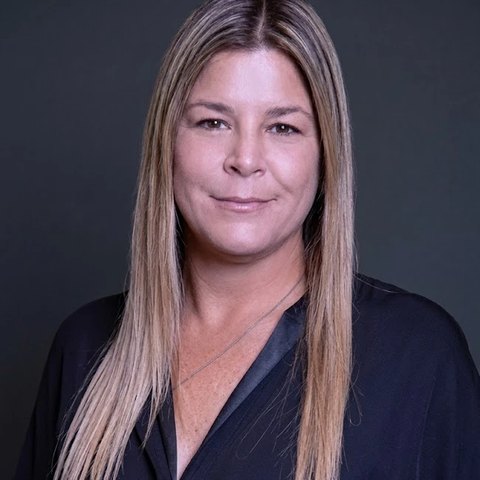
Caro Santamarina is the Founder and CEO of PopTwin.ai. A former NCAA athlete, she spent 20 years in media and entertainment leading operations, sales, partnerships, and expansions, building ecosystems from vision to scale. caro@poptwin.ai